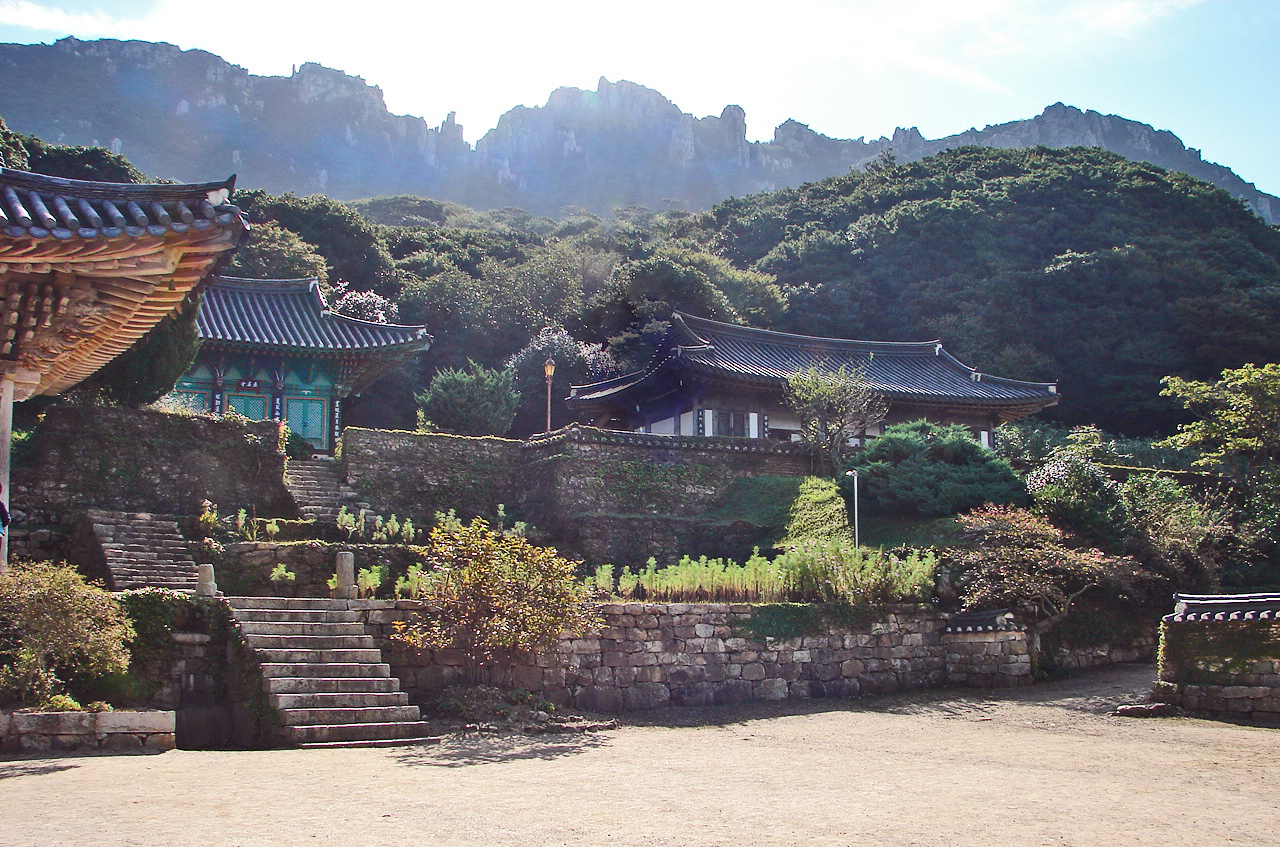

Temple story · Editorial summary, not a direct quote
The Crab and Turtle Cornerstones
The cornerstones of Mihwangsa's main hall
Korea Heritage Service portal: 'Daeungjeon Hall of Mihwangsa Temple, Haenam'; Korea Heritage Service column: 'Turtle and Crab Cornerstones of Mihwangsa, Holding Ordinary People's Wishes' (Jo Sang-sun, National Research Institute of Cultural Heritage)
Several cornerstones of Mihwangsa's main hall are carved with crabs and turtles along with lotus designs.
Several cornerstones along the front and side of Mihwangsa's main hall, Daeungbojeon, are carved with crabs and turtles along with lotus designs, while the rest are natural stones. Jo Sang-sun, then a researcher at the National Research Institute of Cultural Heritage, wrote in 2017 that the crab, which has withstood centuries of sea wind, turns its long eyes toward the Buddha inside the hall, and that the turtle stretches out its two front legs as if in worship. Noting that the temple faces the sea and that people here, then as now, have made their living mainly from the sea, he read the carvings as Buddhism embracing ordinary people's wishes to draw plenty from the sea and keep their families safe from its rough waters. This reading is one researcher's view, and the Korea Heritage Service's description names the same carving a soft-shelled turtle (jara) rather than a turtle. Look closely at the cornerstones under the front pillars of the main hall and find the crab and turtle sitting on lotus petals.