
Temple story · Editorial summary, not a direct quote
The 'Palace Temple'
Royal patronage at Hwagyesa
Encyclopedia of Korean Culture: 'Hwagyesa on Samgaksan'; Hwagyesa website: 'Temple Layout', 'History of Hwagyesa', 'Bohwaru'
In the late nineteenth century the queen dowager and court ladies came here so often that people called Hwagyesa gungjeol, the 'palace temple.'
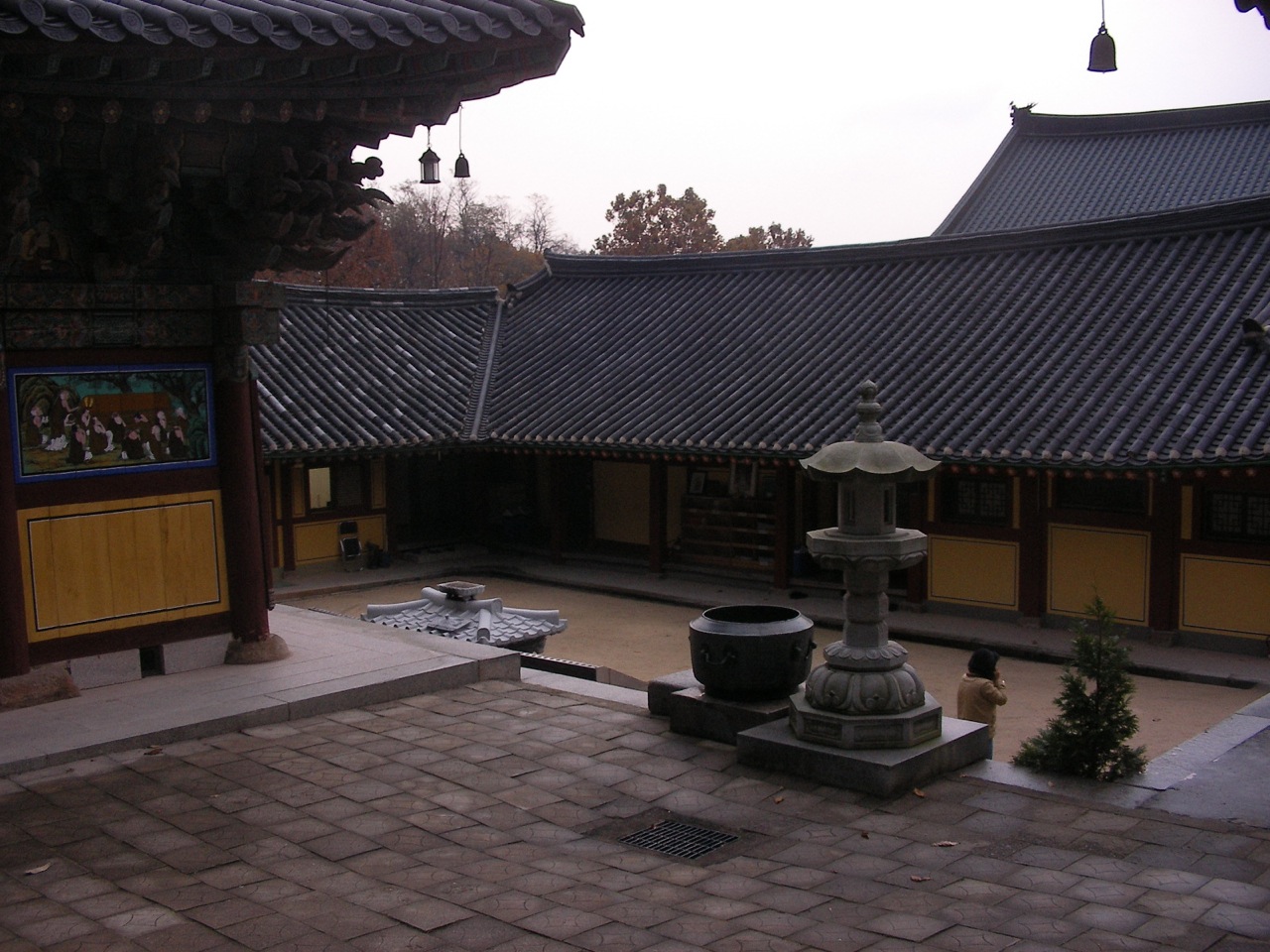
In 1866 the monks Yongseon and Beomun repaired Hwagyesa's run-down buildings with donations from Heungseon Daewongun, and the temple notes that plaques in his hand still hang on halls around the grounds. Later the Queen Dowager Jo made donations for the Myeongbujeon hall, and with the queen dowager and court ladies coming and going so often, people called it gungjeol, the 'palace temple.' The temple explains that because it was rebuilt again and again with royal donations, its layout differs from that of other temples, and points to Bohwaru, the large building set in front of the main hall. According to the temple, Bohwaru was fitted out with the features of an ordinary family home so that members of the royal family could use it comfortably when they came, and since the Buddha in the main hall can be seen from its wooden floor, it was evidently built so that people could pay respects right from the floor. The temple adds that such buildings are found mostly at royal temples around Seoul and are commonly called daebang, 'big room'; today Bohwaru serves as monks' quarters, the temple office and a tea room. One of the 'Hwagyesa' name plaques on Bohwaru is said to have been written by Heungseon Daewongun when the big room was repaired in 1866, so look for it there.