Seoul (Bukhansan) · Deep mountain

Geumsunsa Temple

A deep mountain sanctuary in Seoul offering peerless English meditation below Bibong Peak

Just 25 mins by bus from Gwanghwamun yet feels like a remote mountain retreat. Fluent English-speaking master monk and pine forest walking meditation make it a top-rated Seoul experience.

  • Deep mountain
  • National park
  • Zen meditation
Geumsunsa Temple nestled below Bibong Peak in Mt. Bukhansan
Geumsunsa Temple nestled below Bibong Peak in Mt. Bukhansan. Photo: (c)한국불교문화사업단, culturalcorpsofkoreanbuddhism, CC BY-SA 4.0, Wikimedia Commons. Cropped to fit the display.

Before you decide

How to visit
Walk in, no booking needed
Opening hours
Grounds open at all times, year-round
Admission
Free
Time to allow
About 90 min
English-friendliness
High
Getting there
Not yet confirmed
Google Maps rating
4.5 out of 5 from 1,000+ Google Maps reviews (tracked 2026-10-07)

English-friendliness and time to allow are an editorial assessment of available sources. Conditions vary by program and visit.

Sources and checks

Information may change after the check date. Items not listed here are outside these source checks.

Quick answers

Can I visit Geumsunsa Temple without a reservation?
Yes. You can walk in and explore the grounds during opening hours.
Is there an admission fee at Geumsunsa Temple?
No. Admission is free.
What are the opening hours of Geumsunsa Temple?
Grounds open at all times, year-round

Good to know

  • Deep Zen meditation led by exceptionally fluent English-speaking master monk
  • Pristine mountain stream sounds and pine forest walking trails under Bibong Peak
  • Unique silent meditation experience inside the natural rock cave (Mokjeonggul)

Keep in mind

  • Requires a steep uphill walk through forest from the bus stop (sneakers required)
  • Strictly inaccessible for wheelchairs and strollers

Getting there

From Seoul (Gateway Route): Inside Seoul (Jongno / Mt. Bukhansan)

By public transit

From the stop at Subway Line 3 Gyeongbokgung Station Exit 3, take bus 7212 to the Ibuk Odocheong stop and walk uphill (about 55 minutes including walking, per Kakao Map).

Last stretch on foot

Walk uphill along the Bukhansan forest road from the Ibuk Odocheong stop (about 55 minutes from Gyeongbokgung Station by bus 7212, including walking).

Nearby

Direct trailhead access to Bukhansan National Park Bibong Ridge, about 25 minutes by city bus from the Gwanghwamun and Gyeongbokgung area

137, Bibong-gil, Jongno-gu, Seoul, 03000, Republic of Korea

Travel times and fares are estimates and vary with your starting point and traffic. Check the current route using the maps below.

View on the temple map

Booking & programs

  • English-Dedicated Mountain Templestay

    Every Weekend & Midweek. Advance booking via official temple channels

  • Mokjeonggul Natural Cave Meditation

    Daily (09:00 - 18:00). Free open access

Check room details on the official booking page

Before you go

Terrain and accessibility

Steep mountain approach trail through Bukhansan forest with natural stone steps; strictly inaccessible for wheelchairs and strollers. Hiking sneakers required.

Coming by car?

Public transit recommended (No private vehicles allowed inside Bukhansan National Park)

Temple etiquette basics

  • Chasu: hands folded — Inside the grounds, lightly hold the back of your left hand with your right.
  • Hapjang: a bow with palms together — Meeting a monk outdoors, stop and bow with palms together.
  • Bow before entering a hall — Pause and bow toward the center as you enter or leave a hall.
  • Use the side doors — Use the side doors and sit away from the center.
  • Keep quiet in the hall — Speak softly and walk behind people who are praying.
  • No drinking, smoking or noise — No drinking, smoking or loud behavior.

If this temple's signs or staff say otherwise, follow them.

Read the full visitor guide →

Visitor tips

Synthesized by Seon editors from public reviews and travel sources as of 2026-10-07. These are editorial tips, not individual reviews or guarantees. Read the original reviews on Google Maps

  • Fluent English Monk

    Hands down the best English templestay in Seoul! The master monk speaks fluent, natural English with immense humor and deep insight. You feel completely understood.

  • Valley Retreat

    Only 25 minutes by bus 7212 from Gwanghwamun, but you are inside a deep, quiet mountain valley in Bukhansan National Park. The stream sounds are constant.

  • Mokjeonggul Cave

    Meditating inside the natural rock cave sanctuary (Mokjeonggul) in candlelit silence was a transformative, unforgettable spiritual moment.

  • Steep Hike Warning

    Be prepared for a steep uphill hike from the bus stop up the mountain road. Wear proper shoes! Once you arrive at the gate, the peace is total.

Show 6 more tips
  • Walking Meditation

    The forest walking meditation up toward Bibong peak in the early morning air offers refreshing tranquility. Wonderful vegetarian meals are provided.

  • Personal Tea Chats

    Warm, humble, authentic. No commercial crowds. The monks take time to sit down with you for tea and answer personal life questions with deep care.

  • Hidden Gem

    A hidden jewel. Most tourists only know Jogyesa or Bongeunsa, but Geumsunsa is where you experience authentic Korean mountain monastery life within the city.

  • Ondol Coziness

    Clean wooden rooms with traditional ondol floor heating. You sleep on thick cotton futons listening to pine needles rustling in the wind.

  • Guided 108 Bows

    The evening 108 bows practice was physically challenging but mentally liberating. The monk guided every step in flawless English.

  • Digital Detox

    Unplugging from digital devices for 24 hours here provides deep restoration alongside the cleanest mountain air in Seoul.

History & scenery

Revitalized by Ven. Wolun below Bibong Peak of Mt. Bukhansan, celebrated as Seoul's premier mountain Zen templestay retreat (Geumsunsa, distinct from Gimje Geumsansa).

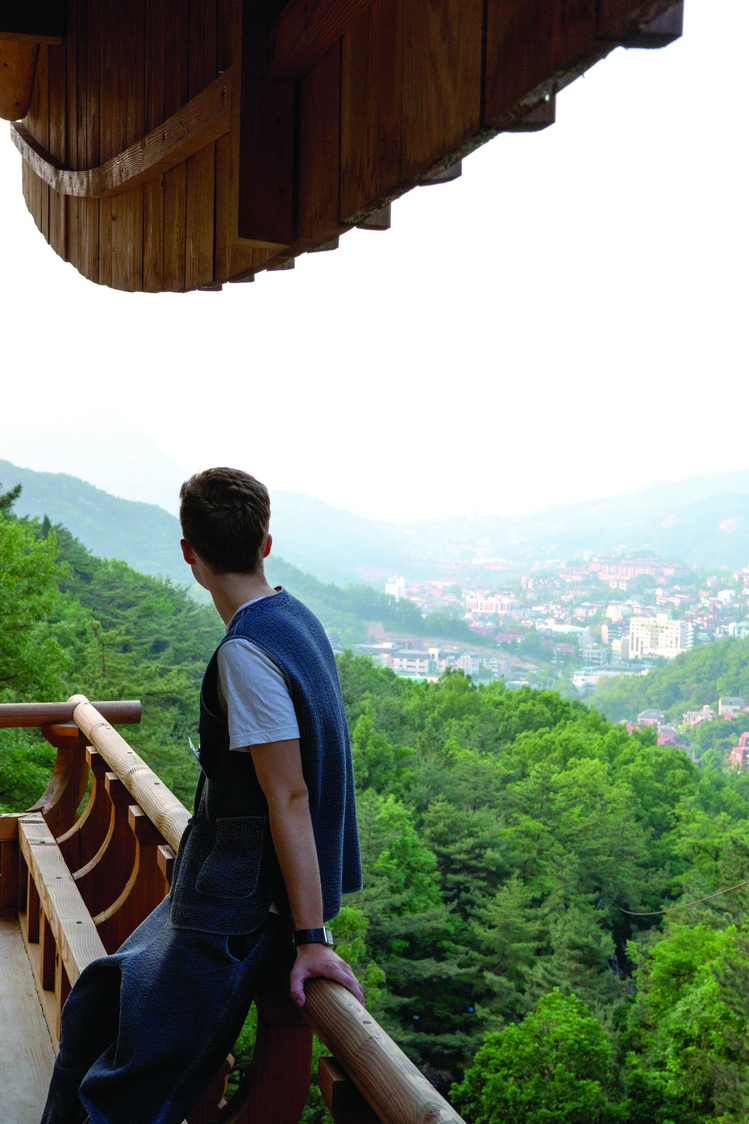
Mokjeonggul cave sanctuary and breathtaking pine forest view overlooking Seoul from the foot of Bibong Peak

Main Hall and serene pine forest approach
Main Hall and serene pine forest approach. Photo: (c)한국불교문화사업단, culturalcorpsofkoreanbuddhism, CC BY-SA 4.0, Wikimedia Commons. Cropped to fit the display.

Temple story · Traditional attribution

The Cave Prayer and the Sealed Letter

The Mokjeonggul tradition of Geumsunsa

Encyclopedia of Korean Culture: 'Mokjeonggul Cave on Samgaksan'; Geumsunsa website: 'Mokjeonggul, a Sacred Place of Prayer', 'Legends of Geumsunsa'

On the day the prayer ended, the royal household obtained a sealed letter, and in it was written: 'Gyeongsul year (1790), sixth month, eighteenth day, at such-and-such an hour, the crown prince descends to be born.' This foretold the birth of King Sunjo.

It is said that at the request of King Jeongjo, troubled because he had no heir, the monk Nongsan (聾山), who had practiced only in the mountains for decades, prayed in this cave, Mokjeonggul, for the birth of a prince. On the day the prayer ended, the story goes, the royal household obtained a sealed letter saying that a crown prince would be born on the eighteenth day of the sixth month of the Gyeongsul year, 1790. When that day came, it is said, a rainbow tinged with red drifted in from the northwest and wrapped around the birth chamber; those who followed its trail found the light coming from the forehead of an old monk seated cross-legged in his robe on the altar of Mokjeonggul, who had already passed away. Jeongjo then ordered the royal household office, Naesusa, to build a temple above the cave, and had Kim Hong-do paint Nongsan's portrait so that offerings could be made to it, the tradition says; Geumsunsa, for its part, says Jeongjo had a temple it credits to the master Muhak greatly rebuilt at this time. The details differ from source to source: the Encyclopedia of Korean Culture records a hundred-day prayer, Geumsunsa a 300-day prayer to Gwaneum, and the part in which Nongsan is reborn as King Sunjo is a story told at the temple. Visit Mokjeonggul beside the temple, the cave the story names as the place of this prayer.

Seasons & daily schedule

When to visit

Spring
Fresh mountain streams running through the valley; blooming cherry blossoms along the path.
Summer
Forest canopy provides natural cooling; meditation in the shaded rock cave.
Autumn
Peak autumn foliage on Mt. Bukhansan; crisp mountain air and clear skies.
Winter
Snowy mountain monastery ambiance with warm, cozy ondol heated rooms.

Seasonal highlights

Dates change every year. Check the temple's notices for this year's dates.

  • Bibong Peak Music & 108 Bows Festival

    May & October. Bamboo flute music in the pine grove and guided 108 bows in English.

  • New Year Bibong Sunrise Peace Bell Striking

    January 1. Early morning hike and bell ceremony welcoming the first light over Seoul.

Daily schedule

04:30 - 05:30

Dawn Chanting

Silent participation

10:30 - 11:30

Midday Buddhist Service

Open

18:00 - 18:40

Evening Chanting & Dharma Drumming

Courtyard viewing

Times represent regular monastic operational schedules and traditional seasonal periods. Confirmed dates for specific annual festivals should be verified via official temple notices prior to visiting.

Confirmed events

No confirmed events listed

Report an error or suggest an update

Show this screen to your taxi driver

기사님, 종로구 구기동 금선사 입구(구기치안센터 방면)로 가주세요. 감사합니다.

도로명 주소 (Road address)

서울특별시 종로구 비봉길 137

Turn up your screen brightness so the driver can read it outdoors.